Finish Carpentry in Downey, CA
Pico Rivera Carpenters provides finish carpentry throughout Downey for crown molding, baseboards, casing, built-ins, and interior trim upgrades.
Downey's large single-family housing base along the Firestone Boulevard and Lakewood Boulevard corridors drives a steady demand for trim matching, crown molding, baseboard replacement, and fitted casework during remodels and flooring updates. With 10 years of carpentry experience and an insured service-area operation, the trim is planned to the measured Downey room — fitting profiles to walls that may not be perfectly uniform and matching existing casing and baseboards where the home calls for it.
- 10 Years of Experience
- Insured
- ~20-Mile Service Radius
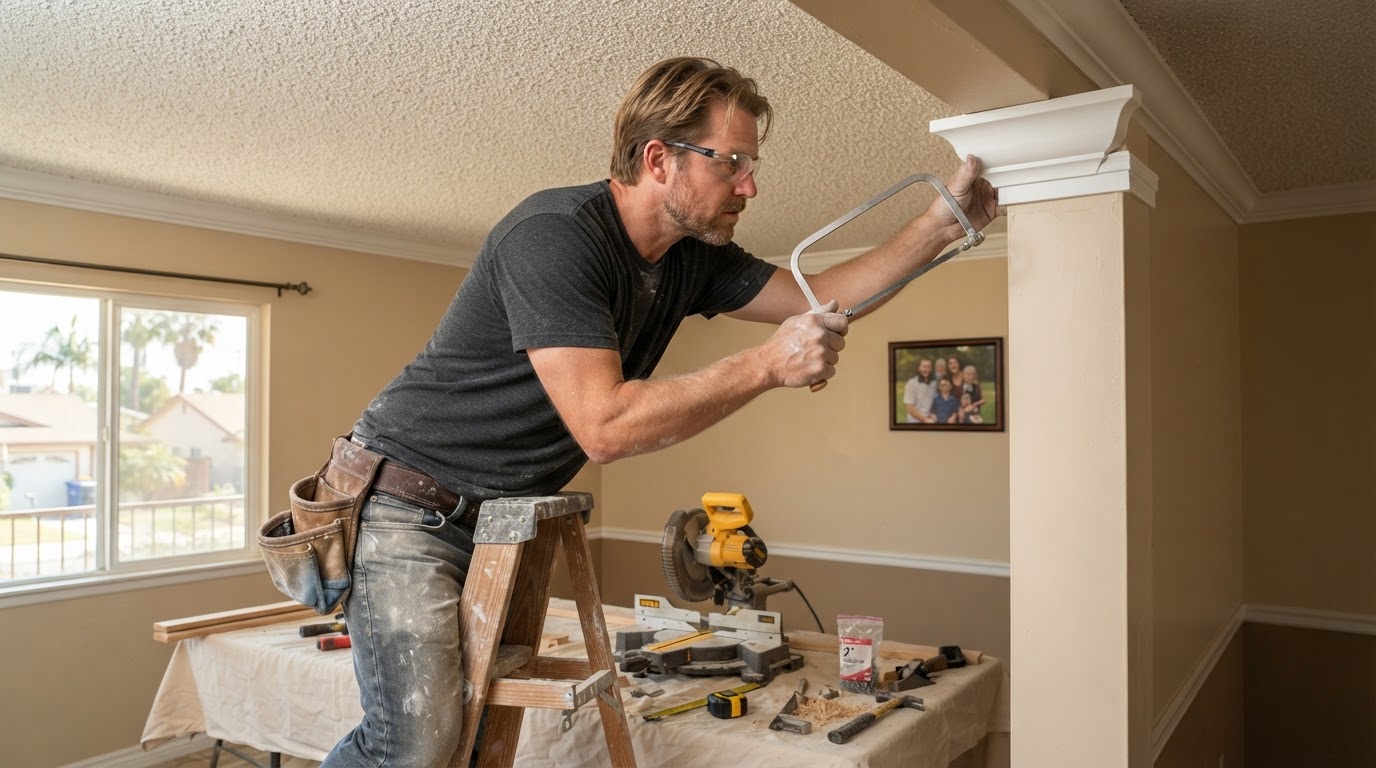
Finish Carpentry for Downey Homes
Finish carpentry in Downey covers the trim and detailing that turns rough openings and wall-to-floor joints into a finished package — crown molding, baseboards, door and window casing, and built-in trim. In a city with a large single-family housing base, Downey remodels and flooring updates often call for fitted trim that matches existing profiles and handles walls and floors that may not be perfectly uniform.
The trim is planned to the Downey room — profiles, materials, coping, miters, and scribe fitting — so the run reads as part of the home's existing detail rather than an applied afterthought. Existing casing and baseboard proportions can influence the trim choice, and hardwood edging, scribe fillers, and trim returns are detailed to match where the home calls for it.
The outcome is Downey trim that reads as a deliberate part of the home's architecture rather than a generic molding run. See the full finish carpentry program on the Pico Rivera finish carpentry page.
What Finish Carpentry Projects Are Common in Downey?
Crown Molding
Crown molding adds a shaped trim run to the wall-to-ceiling joint in Downey living rooms, dining rooms, and hallways where the room reads as unfinished without it, common in the city's established single-family homes along the Firestone Boulevard and Lakewood Boulevard corridors.
The crown profile is set to its spring angle, inside corners are coped, outside corners are mitered, scarf joints join long runs, and finish nails fasten the molding to studs and ceiling joists so the crown reads as set into the room rather than applied to the wall.
The outcome is a Downey interior with crown molding that traces the ceiling line cleanly and reads as part of the home's detailing rather than a later addition.
Baseboards
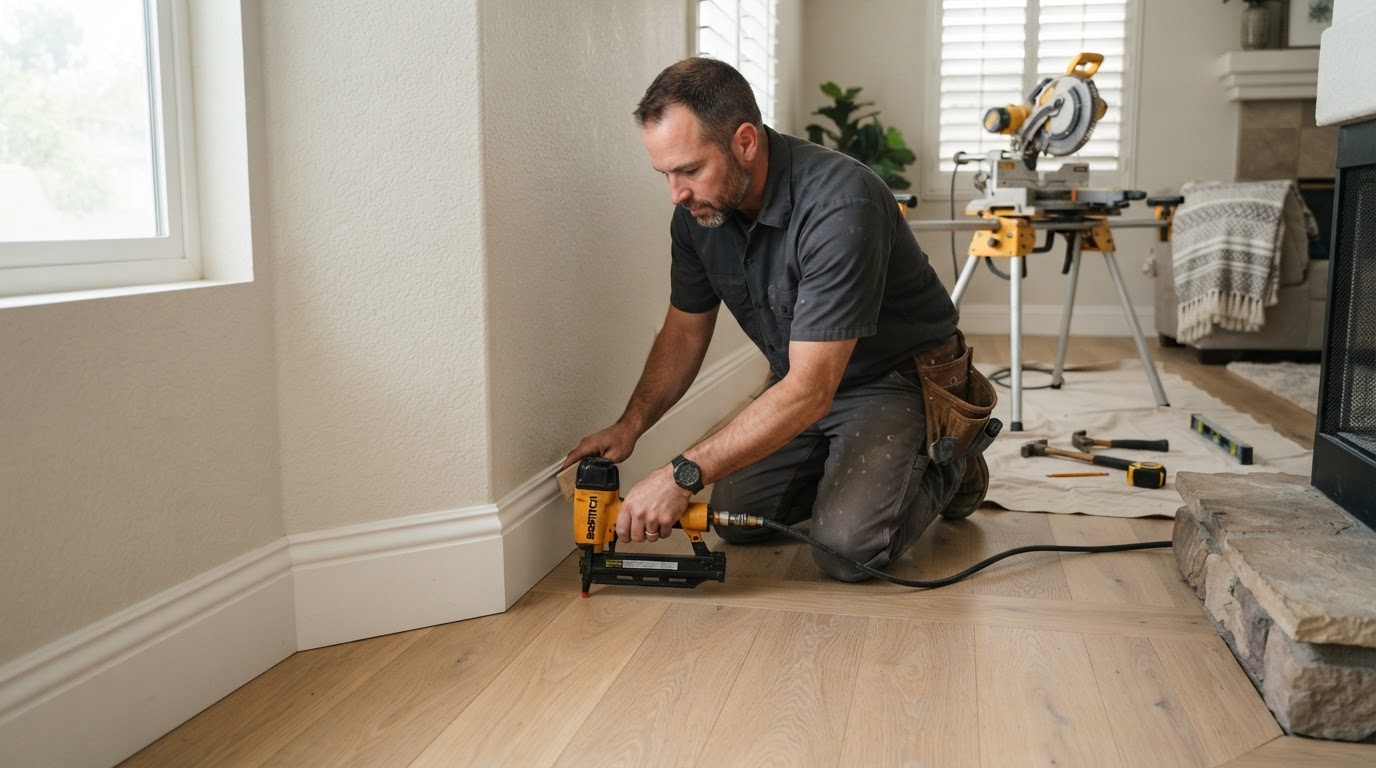
Baseboards close the wall-to-floor joint in Downey rooms — MDF, finger-jointed pine, or hardwood — where the original base is worn, damaged, or too plain for the updated room, often replaced during flooring and remodel work in the city's single-family homes.
Inside corners are coped, outside corners are mitered, shoe molding closes the gap against flooring, and scribe fitting handles wall transitions and out-of-square corners so the baseboard reads as continuous around the room.
The outcome is a Downey room with a baseboard run that reads as a finished transition between wall and floor rather than a gap-filler.
Door and Window Casing
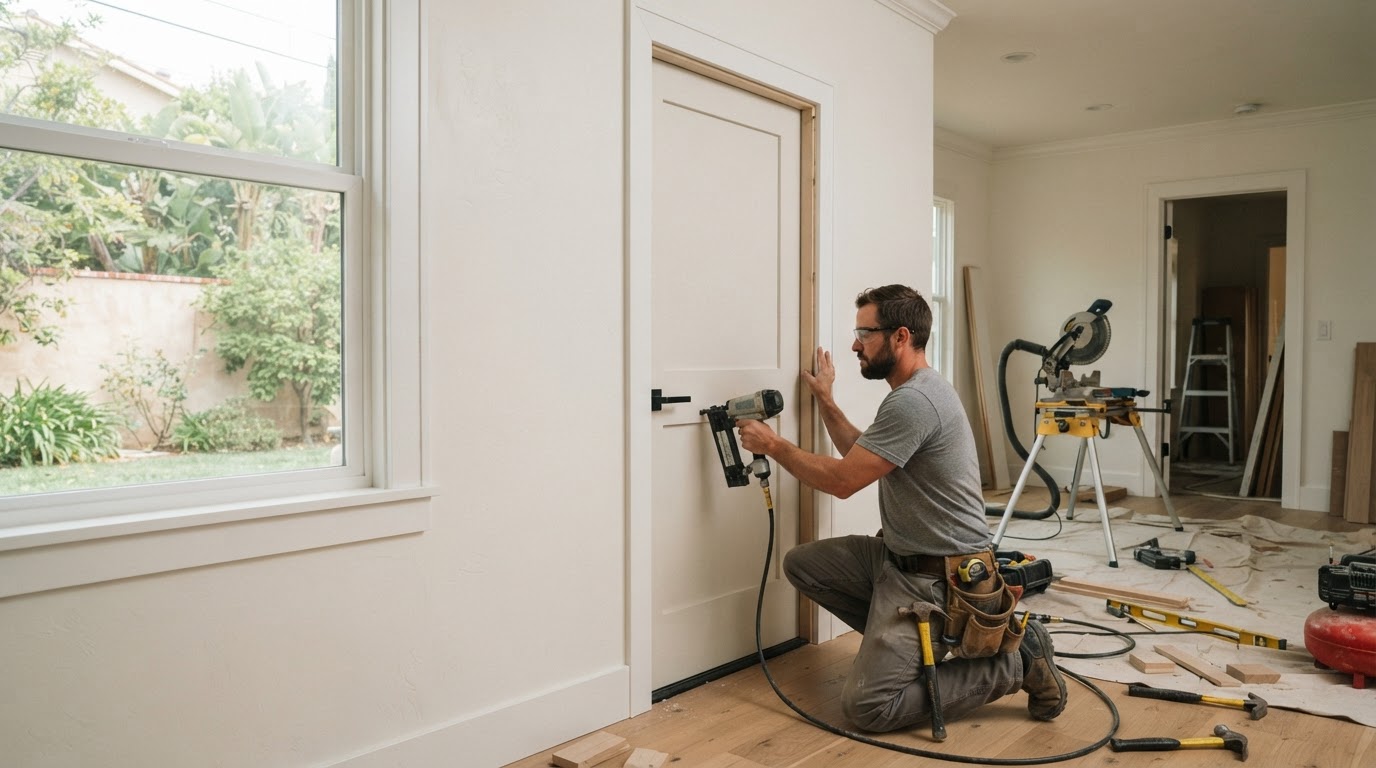
Door and window casing frames the openings in Downey homes with casing profiles, jamb reveals, and mitered or coped joints that turn a rough opening into a finished trim package, common during door replacement and remodeling work.
Casing profiles are selected to match or complement existing trim, miters and returns are cut to the actual jamb reveal, scribe fitting closes gaps against uneven walls, and finish nails fasten the casing to studs and jambs.
The outcome is a Downey opening with casing that reads as a deliberate frame around the door or window rather than trim that was forced into place.
Built-In and Decorative Trim
Built-in and decorative trim adds fitted trim, hardwood edging, wall panels, and scribe fillers to Downey living rooms and hallways where the home calls for more than a flat casing and baseboard run.
Trim returns blend the built-in with the room's existing casing, wall panels are set to level lines, and mantel details and scribe fillers are planned to the actual wall conditions so the trim reads as part of the home's architecture.
The outcome is a Downey interior where the trim package reads as a designed detail rather than a generic molding run.
What Trim Issues Come Up During Downey Remodels?
Matching Existing Profiles
In established single-family Downey homes, existing casing, baseboards, and crown profiles often set the standard for any new trim. Matching or complementing the existing profile — through profile selection, scribe fitting, and trim returns — keeps the trim package reading as continuous with the home's original detail rather than a mismatched addition.
Transitions After Flooring
Downey remodels that replace flooring often require new baseboards, shoe molding, and scribe fitting to handle the new floor-to-wall transition. The trim is planned to the new flooring height so the baseboard reads as a continuous transition rather than a gap left by the flooring change.
Door and Window Trim Updates
Downey door and window updates often require new casing, jamb reveals, and miter joints to frame the updated opening. The casing is planned to the actual jamb reveal and existing trim profiles so the updated opening reads as part of the home's trim package rather than a standalone replacement.
How Much Does Finish Carpentry Cost in Downey?
Finish carpentry pricing in Downey depends on the trim profile, material, linear footage, number of corners, ceiling height, any removal, and finish preparation.
These are Los Angeles-area planning ranges, not historical invoices from Pico Rivera Carpenters.
Crown molding: $5–$15 per linear foot
Notes: profile, material, ceiling height, number of corners, and any removal.
Small trim and baseboard projects: $200–$700
Notes: linear footage, material, room layout, corners, removal, and finish preparation.
Call 562-564-6344 to discuss trim profiles and project scope.
Call 562-564-6344How Does Our Finish Carpentry Process Work in Downey?
Review the Room and Existing Trim
The process starts by reviewing the Downey room, its existing trim profiles, wall and floor conditions, and the openings the trim will frame. In single-family homes, existing casing proportions, settled surfaces, and the home's architectural detail are noted so the trim is planned to the actual room rather than a nominal profile.
Measure Openings and Wall Lines
Openings, ceiling lines, wall lengths, and jamb reveals are measured and checked for plumb and level. Existing profiles are recorded so new casing, baseboards, and crown can be matched or complemented, and corner counts and ceiling heights are confirmed so the material list fits the Downey room.
Select Profiles and Materials
Trim profiles, materials — MDF, finger-jointed pine, or hardwood — and the paint-grade or stain-grade direction are selected to the property owner's goals and the home's existing detail. The profile choice drives how the run reads against existing casing and baseboards.
Cut, Cope, and Fit the Trim
Inside corners are coped, outside corners are mitered, scarf joints join long runs, and scribe fitting handles uneven walls and floors. The trim is cut to the measured room so joints close cleanly and the run reads as continuous rather than pieced together.
Fasten and Set Joints
The trim is fastened with finish nails to studs, plates, and ceiling joists, joints are set caulk-ready, and gaps against uneven surfaces are closed with scribe fillers. The run is fastened so it reads as set into the Downey room rather than applied to the wall.
Final Alignment and Finish Check
A final alignment and finish check confirms joints close, reveals are consistent, and the trim reads as continuous with the home's existing detail. The walkthrough closes the project so the Downey property owner knows what was done and how the trim holds up.
What Should Downey Property Owners Know Before Hiring for Finish Carpentry?
Before hiring for finish carpentry in Downey, profile matching, material choice, and the paint-grade versus stain-grade direction should be settled up front because the trim has to read against existing casing, baseboards, and crown. Wall conditions, existing trim, door and window transitions, and the scope of any removal all shape how the run will read once installed, so a clear scope keeps the trim package continuous with the home rather than a patchwork.
Cosmetic trim work generally differs from structural alterations — replacing casing, baseboards, or crown does not usually involve structural systems, but if openings, walls, or structural elements are changed, City of Downey requirements can differ by scope. Pico Rivera Carpenters does not claim to pull permits; property owners should verify requirements with the City of Downey Building & Safety Division for their specific project.
Finish Carpentry FAQs for Downey, CA
How much does finish carpentry cost in Downey?
Finish carpentry in Downey typically runs $5–$15 per linear foot for crown molding and $200–$700 for small trim and baseboard projects as typical Los Angeles-area planning ranges. Final price depends on the profile, material, linear footage, number of corners, ceiling height, any removal, and finish preparation the Downey home requires.
Can you match existing trim in Downey homes?
Yes, existing trim in established single-family Downey homes can usually be matched or closely complemented by selecting a matching profile, planning scribe fitting against uneven surfaces, and detailing trim returns to read as continuous with the original casing and baseboards. In the city's established neighborhoods, matching existing profiles is often the whole point of the trim project.
Do you install crown molding in Downey?
Yes, Pico Rivera Carpenters installs crown molding in Downey homes, set to the spring angle of the profile, with coped inside corners, outside miters, and scarf joints joined with finish nails. The run is planned to the measured ceiling line so the crown reads as set into the room rather than applied to it.
Do you install baseboards?
Yes, baseboards are installed in MDF, finger-jointed pine, or hardwood with shoe molding, coped inside corners, mitered outside corners, and scribe fitting against flooring and wall transitions. The run is planned to the Downey room so the baseboard reads as continuous with the existing casing and door transitions.
Can you replace only damaged sections of trim?
Yes, damaged sections of trim can be replaced rather than replacing an entire run, particularly where the damage is localized to a door frame, a baseboard section, or a length of casing. The replacement is profile-matched and scribed so the repair reads as continuous with the surrounding trim rather than a patched section.
Can finish carpentry be added during a Downey remodel?
Yes, finish carpentry is commonly added during Downey remodels — crown molding, baseboards, casing, and built-in trim planned to the updated room, new flooring transitions, and door and window changes. In the city's single-family homes, the trim is fitted to the actual room conditions so the run reads as part of the remodel rather than an afterthought.
How do I request a finish carpentry estimate in Downey?
You request a finish carpentry estimate in Downey by calling 562-564-6344 or filling out the form on this page with your ZIP or city and a short project description. After discussing the project and reviewing the space, Pico Rivera Carpenters provides a planning range tied to the profile, material, linear footage, and the Downey home's existing conditions.
Other Carpentry Services We Provide in Downey
Pico Rivera Carpenters provides a full range of carpentry services across Downey in addition to finish carpentry:
Request a Finish Carpentry Estimate in Downey
Pico Rivera Carpenters provides finish carpentry across Downey, California — crown molding, baseboards, door and window casing, and built-in trim — within approximately a 20-mile service radius from Pico Rivera. With 10 years of carpentry experience and an insured service-area operation, the trim is planned to the measured Downey room, fitting profiles to walls that may not be perfectly uniform and matching existing casing and baseboards where the home calls for it.
Call 562-564-6344 to discuss the scope of your Downey finish carpentry project, or fill out the form and a team member will reach out with a planning range tied to the profile, material, linear footage, and the home's existing conditions.
Call 562-564-6344